The Future of Engineering with Industrial AI
Succeed with AI in Knowledge-Based Engineering

Unlock the Power of Virtual Twins
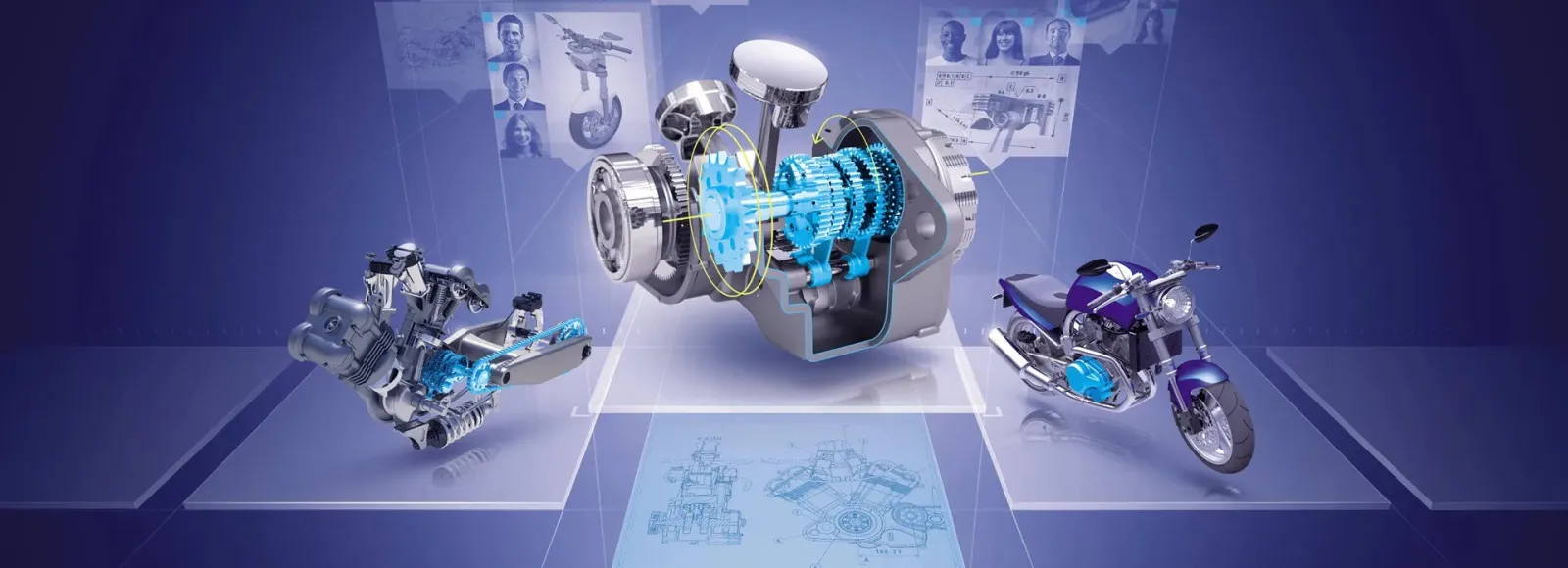
Engineering is entering a new era. Not because AI has arrived, but because for the first time, it actually understands what engineers do. With CATIA, a Virtual Twin is far more than a digital replica. It is a scientific, multidisciplinary, multi-scale, Virtual + Real representation of a product.
What you buy
3DEXPERIENCE platform roles
A role gives one user the apps for their job, connected on the platform, on-cloud or on-premises.
Where will it run?
Pick one to explore more.
Multi-Discipline Automated Engineering
Which role fits your team? .
Frequently asked questions
What are the benefits of using AI in engineering design?
- Efficiency. AI automates tasks, speeding up the design process.
- Optimization. AI optimizes designs for performance and cost.
- Innovation. AI generates creative design solutions.
- Accuracy. AI improves the accuracy of simulations and analyzes.
- Cost-Effectiveness. AI reduces errors and design iteration costs.
- Decision Support. AI provides data-driven insights for informed decision-making.
What is the difference between MODSCAN and MODSIM?
FeatureMODSCANMODSIMPurposeDiagnostic tool for industrial automation systemsIntegrated modeling and simulation approach for product developmentFunctionalityScans and monitors Modbus communication protocolsEnables design optimization, validation, and simulation-driven decision-makingIndustry useIndustrial control systems, factory automationAutomotive, aerospace, industrial equipment, life sciences, high-techKey benefitsIdentifies communication errors in industrial networksReduces time-to-market, improves product performance, and enhances sustainability
What types of multidisciplinary simulations can be performed using MODSIM?
MODSIM supports a wide range of multidisciplinary simulations, allowing engineers to validate product performance under different conditions.
- Structural Analysis. Evaluates mechanical strength, stress, deformation, and fatigue of materials.
- Fluid Dynamics (CFD). Simulates airflow, fluid interactions, cooling, and aerodynamics.
- Thermal Analysis. Assesses heat distribution, thermal conductivity, and cooling strategies.
- Electromagnetic Simulation. Analyzes electromagnetic interference (EMI) and compatibility.
- Multibody Dynamics. Simulates motion, forces, and interactions between moving components.
- Generative Design Optimization. Uses AI-driven algorithms to generate lightweight and high-performance designs.
What are the industry applications of MODeling and SIMulation?
Enhancing aerodynamics, crashworthiness, and electric vehicle (EV) battery performance.
- Aerospace & Defense. Optimizing aircraft structures, reducing weight, and improving fuel efficiency.
- Industrial Equipment. Designing robust machinery, improving manufacturability, and ensuring durability.
- Life Sciences & Healthcare. Simulating medical devices, prosthetics, and patient-specific implants.
- High-Tech. Evaluating thermal performance, optimizing circuit board layouts, and ensuring electromagnetic compatibility.
- Consumer-packaged-goods-retail. Creating sustainable packaging, improving product durability, and enhancing supply chain efficiency.
How does MODSIM accelerate product development and reduce time-to-market?
MODSIM integrates simulation-driven development, allowing engineers to validate designs early, make better decisions and reduce late-stage modifications. By enabling virtual testing of multiple design options, it minimizes physical prototyping, reducing costs and iterations.
Training on CATIA The Future of Engineering with Industrial AI
All CATIA courses
Explore the 3D Pattern Shape Creator Role
3D Pattern Shape Creator lets you design shapes and patterns through interactive panel by using parametric modeling.

Explore the Product Industrial Designer Role
This learning module provides you with a guided and systematic approach to learn about the Product Industrial Designer role. It will teach…