
SIMULIASimulation
Modeling Fracture and Failure with Abaqus
Fracture and failure modeling allows for product designs that maximize the safe operating life of structural components. Abaqus offers many capabilities that enable fracture and failure modeling. This course provides a detailed discussion of these capabilities.
- Level
- Advanced
- Length
- 20 hours 15 min
- Product
- Abaqus
- Delivery
- Instructor-led or eLearning
What you will learn
- Use proper modeling techniques for capturing crack-tip singularities in fracture mechanics problems
- Use Abaqus/CAE to create meshes appropriate for fracture studies
- Calculate stress intensity factors and contour integrals around a crack tip
- Simulate material damage and failure
- Simulate crack growth using cohesive behavior, VCCT, and XFEM
- Simulate low-cycle fatigue crack growth
Topics covered
- Overview - Modeling Fracture and Failure with Abaqus10 min
- 1 - Basic Concepts of Fracture Mechanics1 hour
- 2 - Fracture Analysis of Sharp Cracks3 hours
- 3 - General Fracture Analysis2 hours
- 4 - Material Failure and Wear2 hours
- 5 - Element-based Cohesive Behavior4 hours
- 6 - Surface-based Cohesive Behavior1 hour 30 min
- 7 - Virtual Crack Closure Technique (VCCT)2 hours
- 8 - Fatigue Crack Growth1 hour
- 9 - Mesh-independent Fracture Modeling (XFEM)3 hours 30 min
- A1 - Other Fracture Mechanics Techniques
- A2 - Focused Mesh with Keywords
Who it is for
Simulation Analysts
Prerequisites
Introduction to Abaqus or equivalent and experience using Abaqus.
Related courses
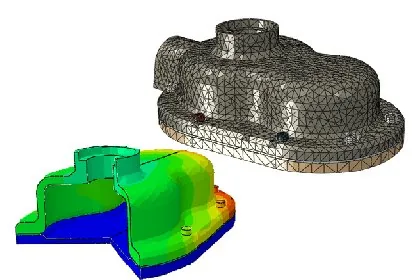
Introduction to Abaqus
27 hours 15 minView course
Analysis of Composite Materials with Abaqus
21 hours 20 minView course
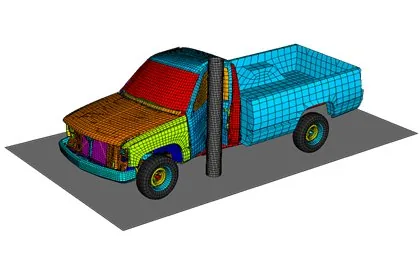
Crashworthiness Analysis with Abaqus
19 hours 15 minView course
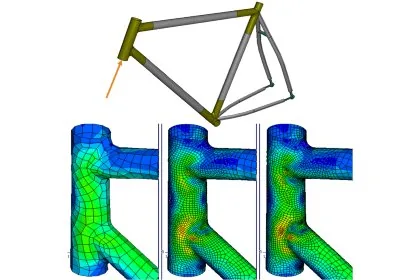
Adaptive Remeshing in Abaqus/Standard
6 hours 15 minView course
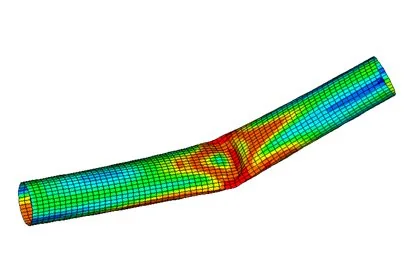
Buckling, Postbuckling and Collapse Analysis
16 hours 15 minView course
GUI Customization with Abaqus
17 hoursView course
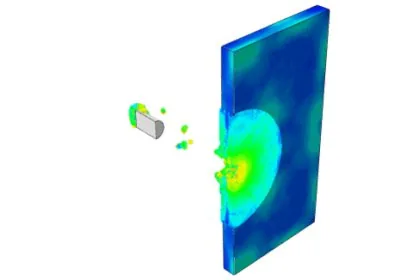
Modeling Extreme Deformation and Fluid Flow with Abaqus
11 hours 45 minView course
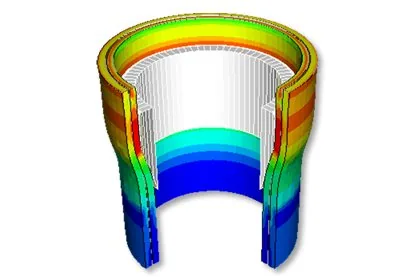
Abaqus for Offshore Analysis
12 hours 45 minView course
