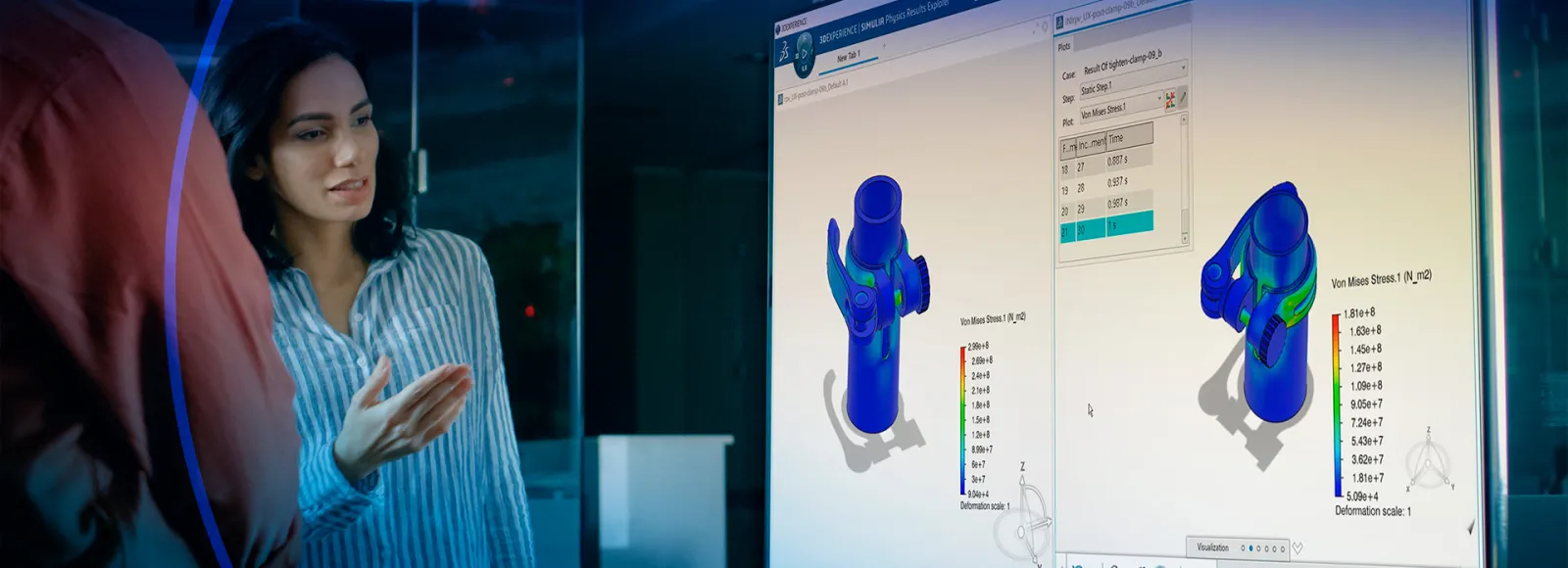
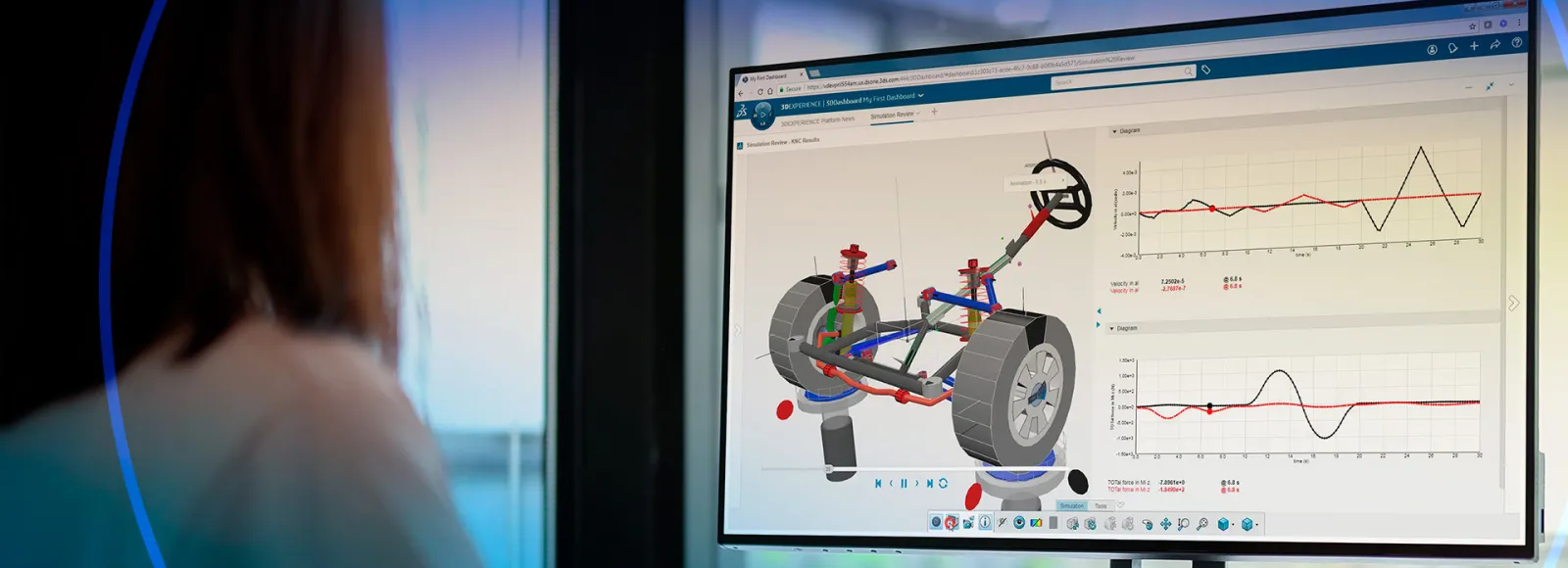
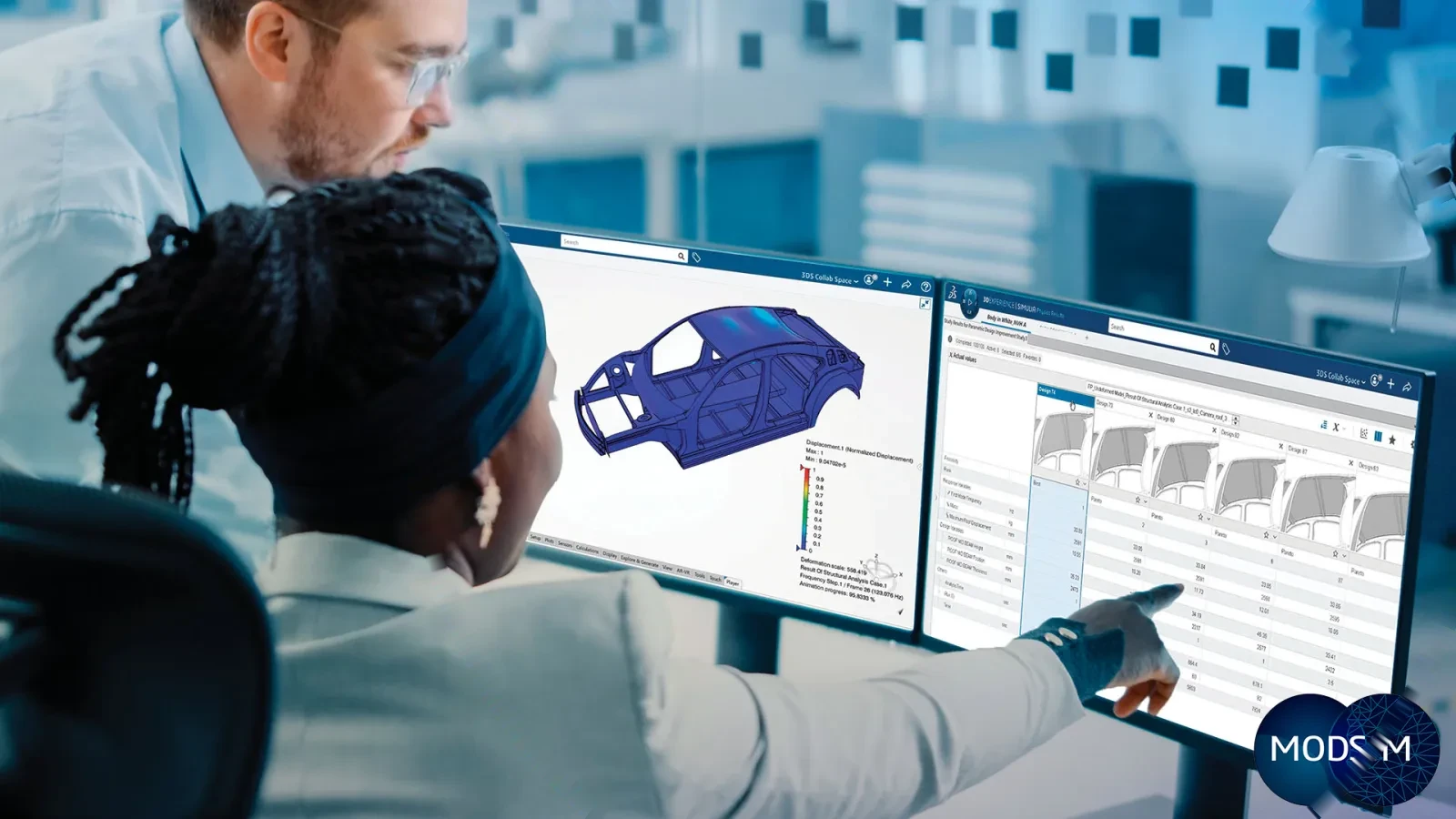
Computational Fluid Dynamics Simulation
Steady-State and transient Internal and external flow around and through solids and structures

Fast, High-Fidelity CFD Simulation
SIMULIA's Computational Fluid Dynamics (CFD) simulations enable customers to engineer products with precise real-world performance predictions delivered quickly.
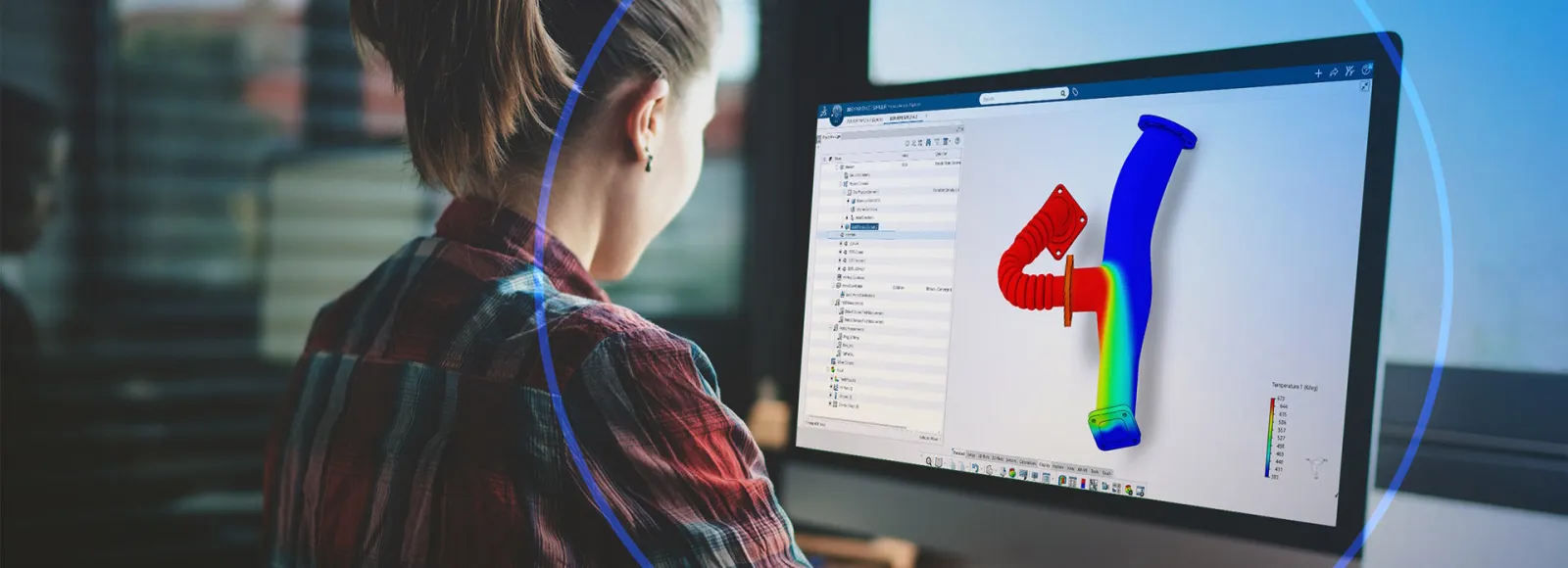
SIMULIA Computational Fluid Dynamics Simulation Key Benefits
- Faster design turnaround timesSimulation accelerates analysis and optimization, allowing shorter design cycles and providing a competitive advantage
- Reduced reliance on testingCompared to wind tunnel testing, simulation is faster, more cost-effective and can be implemented earlier in the design cycle.
- Versatile, high-performance simulation technologyAerodynamic and aeroacoustic simulation can be performed on large, complex structures and in real-world conditions
- Reduced work through automationAutomatic meshing, model-building, visualization and Design of Experiments (DoE) removes tedious set-up work and lets engineers get the results they need faster
- Leverage design modelsUnified modeling and simulation (MODSIM) means simulation can be performed directly on geometry from CATIA or SOLIDWORKS in a unified design environment, reducing the time needed for model building.
- Full analysis with multiphysics simulationFluids simulation can be supplemented by other disciplines, such as vibro-acoustic simulation, structures simulation, electromagnetic simulation and multibody system simulation
Capabilities
Two ways to buy
Desktop products
Installed on your own computers, each product licensed on its own.


3DEXPERIENCE platform roles
A role gives one user the apps for their job, connected on the platform, on-cloud or on-premises.
What does your team do?
Where will it run?
Pick one to explore more.
Computational Fluid Dynamics Simulation
Mold, Casting & Tooling
Porous Media Characterization
Which one fits your work? .
Frequently asked questions
What is computational fluid dynamics (CFD) simulation?
CFD simulates the dynamics of fluids such as liquids and gases, as well as suspended particles and mixtures of these.
What CFD methods are there?
Resolving the fluid flow equations is not trivial - there is no known general analytical solution for the Navier-Stokes equations, meaning that numeric techniques must be used.
What is the difference between Navier-Stokes and Lattice Boltzmann Method?
Both methods are powerful CFD solvers, but they use different approaches and have different benefits. Navier-Stokes methods treat the fluid as a continuum, while Lattice Boltzmann method treats it as discrete particles.
Can CFD simulation use HPC such as GPU acceleration, clusters and cloud?
Yes, several high-performance computing (HPC) techniques can accelerate CFD simulation. GPU acceleration speeds up the simulation process and allows larger and more complex models to be simulated on a single workstation.
Training on SIMULIA Computational Fluid Dynamics Simulation
All SIMULIA courses
Perform as a Fluid Dynamics Engineer
Leverage full integration with CAD and PLM for concurrent, simulation-driven product development. Easily predict steady-state and…
Using PowerFLOW on the 3DEXPERIENCE® Platform
This course provides an introductory overview of 3DX Cloud, focusing on its key features, navigation, and essential functionalities. It is…
Connector for PowerFLOW: Connecting PowerDELTA and 3DEXPERIENCE®
This course describes the set of tools provided by PowerDELTA to: - Save and access frames to/from the 3DEXPERIENCE® platform - Update to…
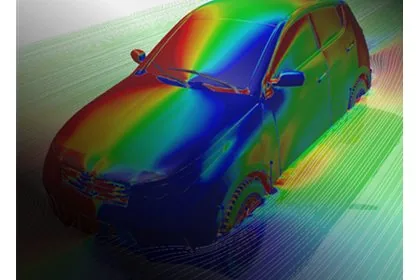
Introduction to PowerFLOW
This course is intended for new users of PowerFLOW or those who have recently started using PowerCASE® and PowerVIZ®. Simplified external…
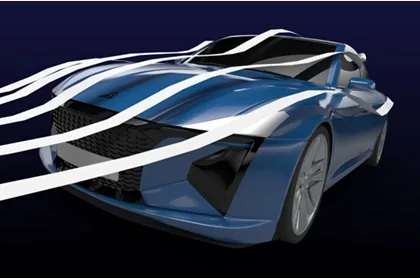
PowerFLOW MODSIM Advanced Common Model - ACM
This course provides a comprehensive overview of the Advanced Common Model (ACM) workflow within the PowerFLOW 2025 environment.…